Détail de l'éditeur
Engineering science reference
localisé à :
Hershey
|
Documents disponibles chez cet éditeur (2)
Ajouter le résultat dans votre panier Faire une suggestion Affiner la recherche
Titre : AI-Based Services for Smart Cities and Urban Infrastructure Type de document : document électronique Auteurs : Lyu Kangjuan, Auteur ; Hu Min, Auteur ; Du Juan, Auteur ; Sugumaran Vijayan, Auteur Editeur : Hershey [United States] : Engineering science reference Année de publication : 2021 Importance : 1 fichier PDF Présentation : ill. ISBN/ISSN/EAN : 978-1-79985-025-0 Note générale : Mode d'accès : accès au texte intégral par :
- authentification après inscription à la plateforme EBSCOhost
ou
- adresse IP de l'École.Langues : Anglais (eng) Mots-clés : City planning--Technological innovations
Smart cities
Urbanization
Artificial intelligence--Engineering applicationsIndex. décimale : 004.8 Intelligence artificielle Résumé : Cities are the next frontier for artificial intelligence to permeate. As smart urban environments become possible, probable, and even preferred, artificial intelligence offers the chance for even further advancement through infrastructure and industry boosting. Opportunity overflows, but without thorough research to guide a complicated development and implementation process, urban environments can become disorganized and outright dangerous for citizens. AI-Based Services for Smart Cities and Urban Infrastructure is a collection of innovative research that explores artificial intelligence (AI) applications in urban planning. In addition, the book looks at how the internet of things and AI can work together to enable a real smart city and discusses state-of-the-art techniques in urban infrastructure design, construction, operation, maintenance, and management. While highlighting a broad range of topics including construction management, public transportation, and smart agriculture, this book is ideally designed for engineers, entrepreneurs, urban planners, architects, policymakers, researchers, academicians, and students.
SérieNote de contenu : Summary :
I.Fundamentals of smart cities
1.Definition and history of smart cities
2.The development of smart cities in the World
3.Core Technology of smart cities
4.Interpretation of the construction standard of smart city standard systems
5.Framework and structure of smart cities
II.Infrastructure and engineering construction of smart cities
6.Infrastructure and industry economy
7.Intelligent engineering construction management: On-Site construction management
8.Intelligent engineering construction management: long-distance construction management
9.Performance Evaluation on the Intelligent Operation and Maintenance Mode of Public-Private
10.Policy Recommendations on the application of AI to the Development of Smart Cities
11.Smart city service
III.Application of AI for smart city services
12.Application of fuzzy analytic hierarchy process for evaluation of ankara-izmir high-speed train project.
13.Applications of artificial intelligence for smart agriculture
14.The role of AI-Based integrated Physical security Governance for optimizing IoT devices connectivity in smart cities
15.Smart home environment
En ligne : https://research.ebsco.com/linkprocessor/plink?id=48af7405-c18f-3f87-8647-fa659c [...] AI-Based Services for Smart Cities and Urban Infrastructure [document électronique] / Lyu Kangjuan, Auteur ; Hu Min, Auteur ; Du Juan, Auteur ; Sugumaran Vijayan, Auteur . - Hershey [United States] : Engineering science reference, 2021 . - 1 fichier PDF : ill.
ISBN : 978-1-79985-025-0
Mode d'accès : accès au texte intégral par :
- authentification après inscription à la plateforme EBSCOhost
ou
- adresse IP de l'École.
Langues : Anglais (eng)
Mots-clés : City planning--Technological innovations
Smart cities
Urbanization
Artificial intelligence--Engineering applicationsIndex. décimale : 004.8 Intelligence artificielle Résumé : Cities are the next frontier for artificial intelligence to permeate. As smart urban environments become possible, probable, and even preferred, artificial intelligence offers the chance for even further advancement through infrastructure and industry boosting. Opportunity overflows, but without thorough research to guide a complicated development and implementation process, urban environments can become disorganized and outright dangerous for citizens. AI-Based Services for Smart Cities and Urban Infrastructure is a collection of innovative research that explores artificial intelligence (AI) applications in urban planning. In addition, the book looks at how the internet of things and AI can work together to enable a real smart city and discusses state-of-the-art techniques in urban infrastructure design, construction, operation, maintenance, and management. While highlighting a broad range of topics including construction management, public transportation, and smart agriculture, this book is ideally designed for engineers, entrepreneurs, urban planners, architects, policymakers, researchers, academicians, and students.
SérieNote de contenu : Summary :
I.Fundamentals of smart cities
1.Definition and history of smart cities
2.The development of smart cities in the World
3.Core Technology of smart cities
4.Interpretation of the construction standard of smart city standard systems
5.Framework and structure of smart cities
II.Infrastructure and engineering construction of smart cities
6.Infrastructure and industry economy
7.Intelligent engineering construction management: On-Site construction management
8.Intelligent engineering construction management: long-distance construction management
9.Performance Evaluation on the Intelligent Operation and Maintenance Mode of Public-Private
10.Policy Recommendations on the application of AI to the Development of Smart Cities
11.Smart city service
III.Application of AI for smart city services
12.Application of fuzzy analytic hierarchy process for evaluation of ankara-izmir high-speed train project.
13.Applications of artificial intelligence for smart agriculture
14.The role of AI-Based integrated Physical security Governance for optimizing IoT devices connectivity in smart cities
15.Smart home environment
En ligne : https://research.ebsco.com/linkprocessor/plink?id=48af7405-c18f-3f87-8647-fa659c [...] Réservation
Réserver ce document
Exemplaires (1)
Code-barres Cote Support Localisation Section Disponibilité Etat_Exemplaire E00440 004.8 KAN Ressources électroniques Bibliothèque Centrale Data sciences_Intelligence artificielle Disponible Téléchargeable
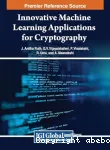
Titre : Innovative machine learning applications for cryptography Type de document : document électronique Auteurs : J.- Anitha Ruth, Auteur ; G.V.-Mahesh Vijayalakshmi, Auteur ; P. Visalakshi, Auteur ; R. Uma, Auteur Editeur : Hershey [United States] : Engineering science reference Année de publication : 2024 Importance : 1 fichier PDF Présentation : ill. ISBN/ISSN/EAN : 979-83693-16429-- Note générale : Mode d'accès : accès au texte intégral par :
- authentification après inscription à la plateforme EBSCOhost
ou
- adresse IP de l'École.
IndexLangues : Anglais (eng) Mots-clés : Cryptography--Data processing
Data encryption (Computer science)
Machine learning
Cryptography--Technological innovationsIndex. décimale : 004 Informatique. Science et technologie de l'informatique Résumé : Data security is paramount in our modern world, and the symbiotic relationship between machine learning and cryptography has recently taken center stage. The vulnerability of traditional cryptosystems to human error and evolving cyber threats is a pressing concern. The stakes are higher than ever, and the need for innovative solutions to safeguard sensitive information is undeniable. Innovative Machine Learning Applications for Cryptography emerges as a steadfast resource in this landscape of uncertainty. Machine learning's prowess in scrutinizing data trends, identifying vulnerabilities, and constructing adaptive analytical models offers a compelling solution. The book explores how machine learning can automate the process of constructing analytical models, providing a continuous learning mechanism to protect against an ever-increasing influx of data. This book goes beyond theoretical exploration, and provides a comprehensive resource designed to empower academic scholars, specialists, and students in the fields of cryptography, machine learning, and network security. Its broad scope encompasses encryption, algorithms, security, and more unconventional topics like Quantum Cryptography, Biological Cryptography, and Neural Cryptography. By examining data patterns and identifying vulnerabilities, it equips its readers with actionable insights and strategies that can protect organizations from the dire consequences of security breaches. Innovative Machine Learning Applications for Cryptography bridges the gap between two powerful domains and assists in diminishing the influence of human error on encryption and decryption processes. For academic scholars, engineers, scientists, and students, this book offers a valuable treasure trove of knowledge and actionable strategies in an age where the security of every byte is of utmost importance. Note de contenu : Summary of the book :
1. Introduction to modern cryptography and machine learning
2. Future outlook
3. Artificial intelligence-supported bio-cryptography protection
4. An adaptive cryptography using openai api
5. Optimized deep learning-based intrusion detection using woa with lightgbm
...En ligne : https://research.ebsco.com/linkprocessor/plink?id=87b26b50-7e11-37a2-8b94-d82413 [...] Innovative machine learning applications for cryptography [document électronique] / J.- Anitha Ruth, Auteur ; G.V.-Mahesh Vijayalakshmi, Auteur ; P. Visalakshi, Auteur ; R. Uma, Auteur . - Hershey [United States] : Engineering science reference, 2024 . - 1 fichier PDF : ill.
ISBN : 979-83693-16429--
Mode d'accès : accès au texte intégral par :
- authentification après inscription à la plateforme EBSCOhost
ou
- adresse IP de l'École.
Index
Langues : Anglais (eng)
Mots-clés : Cryptography--Data processing
Data encryption (Computer science)
Machine learning
Cryptography--Technological innovationsIndex. décimale : 004 Informatique. Science et technologie de l'informatique Résumé : Data security is paramount in our modern world, and the symbiotic relationship between machine learning and cryptography has recently taken center stage. The vulnerability of traditional cryptosystems to human error and evolving cyber threats is a pressing concern. The stakes are higher than ever, and the need for innovative solutions to safeguard sensitive information is undeniable. Innovative Machine Learning Applications for Cryptography emerges as a steadfast resource in this landscape of uncertainty. Machine learning's prowess in scrutinizing data trends, identifying vulnerabilities, and constructing adaptive analytical models offers a compelling solution. The book explores how machine learning can automate the process of constructing analytical models, providing a continuous learning mechanism to protect against an ever-increasing influx of data. This book goes beyond theoretical exploration, and provides a comprehensive resource designed to empower academic scholars, specialists, and students in the fields of cryptography, machine learning, and network security. Its broad scope encompasses encryption, algorithms, security, and more unconventional topics like Quantum Cryptography, Biological Cryptography, and Neural Cryptography. By examining data patterns and identifying vulnerabilities, it equips its readers with actionable insights and strategies that can protect organizations from the dire consequences of security breaches. Innovative Machine Learning Applications for Cryptography bridges the gap between two powerful domains and assists in diminishing the influence of human error on encryption and decryption processes. For academic scholars, engineers, scientists, and students, this book offers a valuable treasure trove of knowledge and actionable strategies in an age where the security of every byte is of utmost importance. Note de contenu : Summary of the book :
1. Introduction to modern cryptography and machine learning
2. Future outlook
3. Artificial intelligence-supported bio-cryptography protection
4. An adaptive cryptography using openai api
5. Optimized deep learning-based intrusion detection using woa with lightgbm
...En ligne : https://research.ebsco.com/linkprocessor/plink?id=87b26b50-7e11-37a2-8b94-d82413 [...] Réservation
Réserver ce document
Exemplaires (1)
Code-barres Cote Support Localisation Section Disponibilité Etat_Exemplaire E00474 004 INO Ressources électroniques Bibliothèque Centrale Informatique Disponible Téléchargeable